How to Vet a Filipino Virtual Assistant Before Hiring: Background Checks, References, and Red Flags
You are about to hand a stranger access to your inbox, your CRM, and possibly your bank account. A short vetting routine - identity check, NBI clearance, references, and a paid trial - separates reliable Filipino VAs from costly mistakes. Here is the checklist.
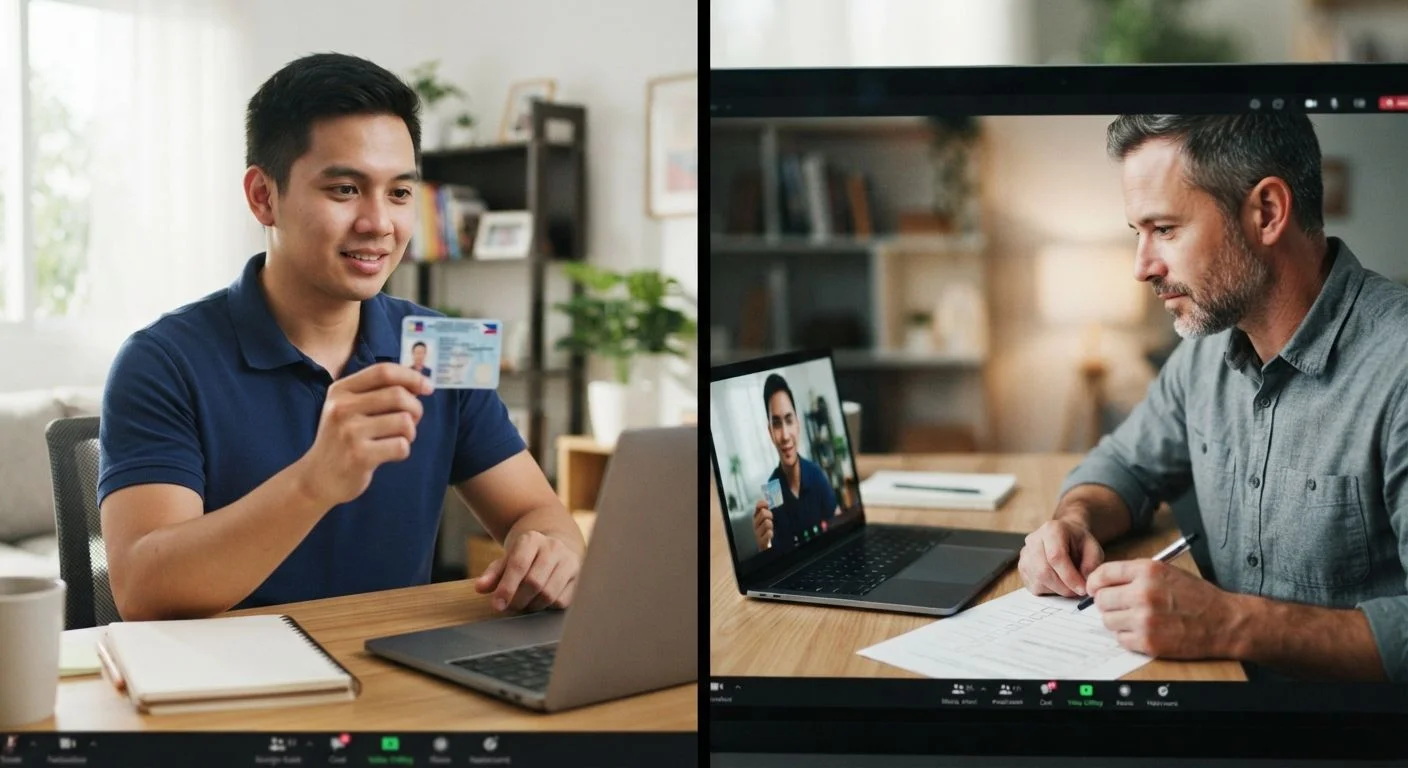
Image generated with AI
You are about to hand a stranger access to your inbox, your CRM, and possibly your bank account. Learning how to vet a Filipino virtual assistant before hiring is the difference between a dependable long-term hire and a costly mistake. A short routine - identity check, NBI clearance, references, and a paid trial - takes a few days and protects months of productivity. Here is the checklist.
Why Vetting Matters More Than the Interview
A video interview tells you how someone presents themselves, not whether their credentials are real or their work history checks out. When you hire remotely from the Philippines, you are granting access to shared drives, CRMs, and eventually financial accounts - often within the first weeks. US startups routinely hire Filipino VAs through platforms like OnlineJobs.ph, run a single video call, check the references the candidate provided, and then hand over the keys. That is a lot of trust based on very little verification.
Vetting is not about distrusting candidates. It is about confirming the basics - identity, background, experience, and skill - before you commit. Candidates with falsified credentials exist, and a bad hire costs you more than the salary: onboarding time, client-facing mistakes, and the risk of data exposure. A structured check takes hours, not weeks, and it signals to serious candidates that you run a professional operation.
Step 1: Verify Identity and Criminal Record (NBI Clearance)
The NBI Clearance is the Philippines' official criminal background check and the single most useful document you can request from a candidate. It is issued by the National Bureau of Investigation and is widely used for employment screening in the country.
Ask the candidate for their NBI clearance and verify it online through the official verification system using the reference number printed on the document. Never accept a photo of the clearance as proof - photos can be edited. Check the number, the name, and the issue date directly on the verification page.
One nuance matters: a "HIT" on an NBI clearance does not always mean a conviction. It can indicate a namesake match or a case that was dismissed. If you see a HIT, ask the candidate to explain it and request supporting documents before you draw conclusions. Most employers use the NBI clearance as a screening gate, not an automatic disqualifier.
Step 2: Verify Work History, Education, and Licenses
A standard Philippine employment background check covers four areas: PSA civil registry records for identity, PRC records for professional licenses, NBI clearance for criminal history, and direct contact with previous employers for employment history.
PSA Records, PRC Licenses, and TESDA Certifications
The PSA (Philippine Statistics Authority) issues civil registry documents - birth certificates and marriage certificates - that confirm identity. The PRC (Professional Regulation Commission) maintains records for licensed professionals such as accountants, nurses, and engineers. TESDA (Technical Education and Skills Development Authority) certifies technical skills like bookkeeping, graphic design, and IT support.
If your candidate claims a specific credential - a bookkeeping certificate, a design diploma, an accounting license - ask for the registration or certificate number and verify it with the issuing body. For skills that matter to your business, consider a screening package that adds education verification and TESDA certification checks to the core NBI check. These services are inexpensive compared with the cost of hiring someone who fabricated their qualifications.
Step 3: Run Reference Checks That Reveal Real Behavior
References chosen by the candidate will always say nice things. Contact previous employers directly, and ask for a specific manager or client from a named engagement rather than accepting a generic list.
Prepare concrete questions: How reliable was this person with deadlines? How was their attendance and communication? Would you rehire them for another project? What would you want them to improve? Two solid references who give specific answers beat five vague ones.
A few practical tips: confirm that the reference actually worked with the candidate - job titles and LinkedIn connections help - ask about how the candidate handled feedback and pressure, and watch for references who are "unavailable" every time you call. Evasiveness is a signal.
Step 4: Prove Skills With a Paid Trial
No document proves how someone works. A paid trial does. This is the single most reliable step in the whole process, because it tests real behavior under real conditions.
Design the trial around one live, supervised task: draft a real client email, schedule a real meeting, clean a real spreadsheet, or handle a real support ticket. Avoid hypotheticals - the point is to see how the candidate handles your actual tools, your tone, and your standards.
Observe three things during the trial: how they handle feedback (do they incorporate it or get defensive?), how they manage deadlines (do they communicate early when something slips?), and the quality of the final output. Pay them for the trial time - it is a small cost and it sets the tone for a professional relationship. If you need a structure for the trial, our guide on what to delegate to your first Filipino VA pairs well with it.
Red Flags That Should Stop the Process
Some signals should pause or end the process no matter how good the interview felt:
- AI-generated cover letters with identical phrasing across candidates and no mention of your specific business. Personalization is the baseline.
- Identity mismatches between profile photos, the person on the video call, and the documents.
- References who are unreachable or vague when you finally reach them.
- Unexplained employment gaps or a work history that shifts between conversations.
- Pressure to start immediately or to move the conversation off-platform before you have verified anything.
- Refusal to share a government ID or an NBI clearance.
Compare candidates against your own hiring mistakes checklist and trust the process over the charm. A genuinely good candidate will have no problem with verification - the best freelancers are used to it and welcome it.
How to Vet a Filipino Virtual Assistant: The Checklist in Order
Run this in order and you will cover the essentials in a few days:
- Identity check: government ID, plus PSA records if needed.
- NBI clearance, verified online with the reference number.
- Work history and credential verification: PRC, TESDA, education.
- Direct reference checks with previous employers.
- A paid trial with one real, supervised task.
Once the candidate passes, move fast: send a clear contract, set up your onboarding checklist, and document your SOPs before the handoff. A solid vetting process is the foundation of a long, productive working relationship with your Filipino VA.
TopServicesPH Team
Guides and insights for hiring Filipino talent — and for Filipino freelancers building their remote careers.
Ready to hire?
Browse verified Filipino freelancers and contact them directly — free, with no commission.
Find talent