How to Hire a Filipino Web Developer: 2026 Rates, Skills, and Where to Find Top Talent
Filipino web developers average $10-$18 an hour in 2026 - a fraction of US or Australian rates - with high English proficiency and strong US/AU time zone overlap. Here are the real rate ranges, skills to verify, and where to find developers you can keep.

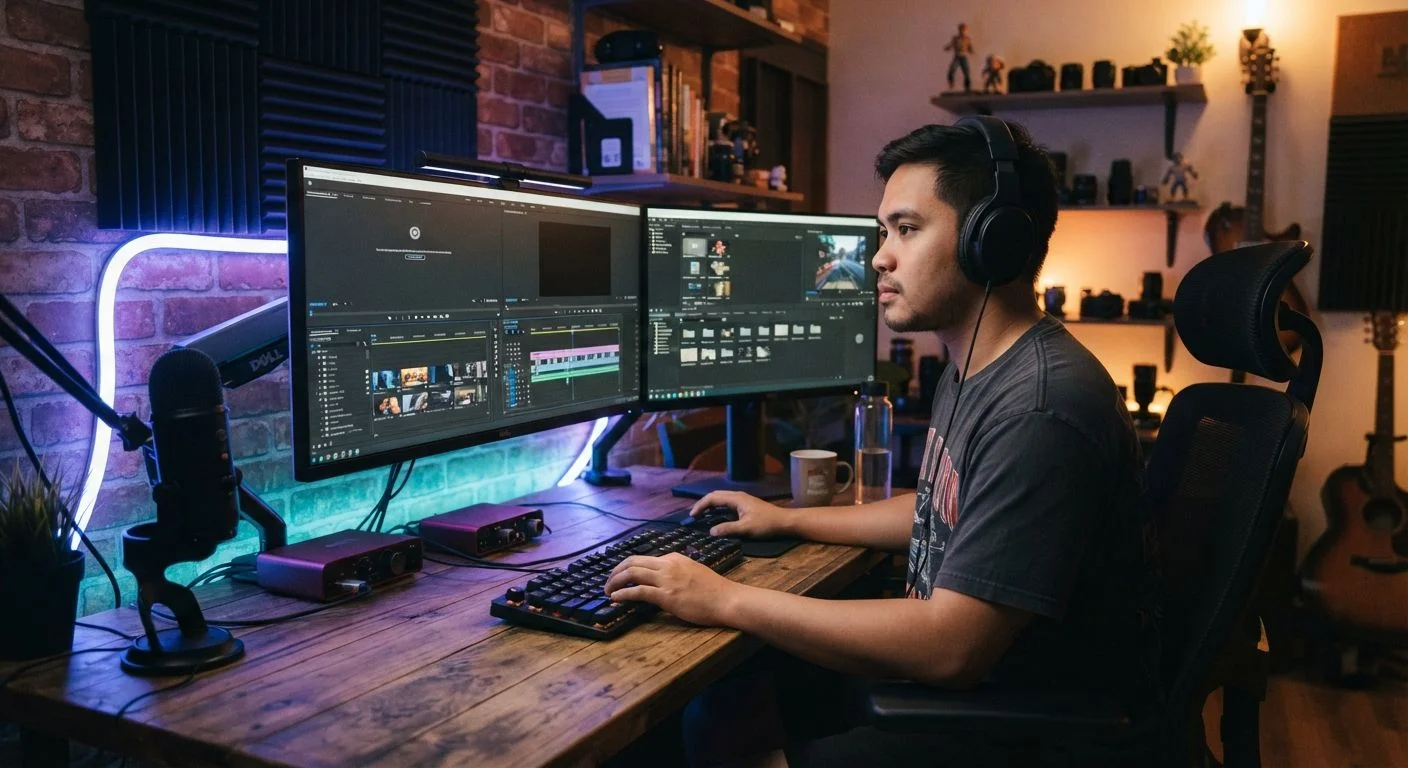
Image generated with AI
When you hire a Filipino web developer, you get full-stack engineering capacity at a fraction of US or Australian rates: roughly $10 to $18 an hour in 2026, backed by a $42 billion IT-BPM industry and English proficiency that ranks among the best in Asia. This guide breaks down Filipino web developer rates by experience and model, the skills you should verify before committing, where to find candidates, and how to onboard and keep a developer for the long term.
Why Hire a Filipino Web Developer in 2026
The Philippines has become one of the most reliable sources of remote development talent in Asia, and the numbers explain why. The country's IT-BPM sector is targeting about $42 billion in export revenue for 2026, with employment approaching 1.97 million workers and growth around 5 percent, above the 3 percent global average for the industry. That scale means employers are not betting on a handful of talented individuals: they are tapping into a mature, competitive labor market where developers have spent years serving international clients.
English proficiency is a major part of the value. The Philippines ranked second in Asia and 28th globally in the 2025 EF English Proficiency Index with a score of 569 out of 800, classified as "high proficiency" and comfortably ahead of India, Vietnam, and China. In practice, that means your developer can write documentation, join client calls, and push back with clarifying questions without a translator in the middle.
Time zone is the other differentiator. Developers in the Philippines work on UTC+8, which means their late afternoon and evening overlap with the entire US East Coast business day, and the overlap with Australia is almost total. You can hold a live standup at the start of your morning and still get async coverage for the rest of the day. For a practical playbook on running that kind of schedule, see our guide to async communication with a Filipino remote team.
The headline, though, is cost. Contractor rates of $10 to $18 an hour compare with typical US agency rates of $100 to $150 an hour for equivalent work. You are not hiring a cheaper version of a US developer; you are hiring a full engineering resource at a fraction of the price.
Filipino Web Developer Rates: What You Will Pay in 2026
Published rate data for 2026 is consistent: Filipino developers cost roughly $10 to $18 an hour depending on technology stack and experience level, according to the VA Masters developer cost guide. The spread widens once you look at seniority and specialization. SecondTalent's 2026 hiring cost data puts a junior WordPress developer at about $1,000 a month, while a senior AI/ML engineer working remotely can reach about $10,700 a month, and senior full-stack engineers with modern frameworks and enterprise experience can command $55 an hour or more.
Keep local salaries in perspective so you do not overpay or under-offer. The average web developer salary in Manila is around PHP 951,000 a year, roughly PHP 79,000 a month or about $1,400 at current exchange rates, according to SalaryExpert. International remote rates run well above local salaries, which is exactly why experienced Filipino developers choose remote work: the premium is justified by English fluency, time zone coverage, and reliability, not by charity.
Hourly, Monthly Retainer, or Project-Based: Which Model Fits
- Hourly: best for short tasks, maintenance, and work where scope changes often. Platforms like Upwork provide escrow protection for this model.
- Monthly retainer: a dedicated developer who works a set number of hours or full time, typical of OnlineJobs.ph-style hiring. Mid-level developers in this model run about $1,500 to $3,500 a month.
- Project-based with fixed scope: the right fit for a defined build with clear milestones. Protect both sides with written acceptance criteria before work starts.
- Agency: adds a management markup, but covers vetting, payroll, and replacement if the developer does not work out. Our direct hire vs agency vs EOR comparison walks through the trade-offs.
Rate Ranges by Experience and Stack
| Experience | Typical stack | 2026 planning range |
|---|---|---|
| Junior | WordPress, basic HTML/CSS/JS | $1,000-$1,500 per month |
| Mid-level | Full-stack (Laravel, React, Node.js) | $1,500-$3,500 per month, or $18-$30 per hour |
| Senior | Modern frameworks, cloud, architecture | $40-$55+ per hour |
| Specialist | AI/ML, data engineering | up to $10,700 per month |
Treat these as planning anchors, not quotes. The final number depends on the stack, the candidate's track record, and whether you need full-time dedication or project availability.
Skills to Look For (and How to Verify Them)
For a general web build, look for strength in one of the common stacks: frontend with React, Vue, or Next.js; backend with Node.js, PHP/Laravel, or Python/Django; or full-stack coverage of both. If your site runs on a CMS or e-commerce platform, WordPress, Shopify, and Webflow experience matters more than framework knowledge. On every hire, check the fundamentals: Git and GitHub workflow, API integration, and database basics.
Soft skills deserve as much weight as the technical list. Written English quality, comfort with asynchronous communication, the habit of asking clarifying questions instead of guessing, and a sense of ownership over the work are what separate a dependable long-term developer from someone who just completes tickets.
Verify everything you can. Ask for a portfolio of live sites, review the candidate's GitHub commit history for consistent contribution patterns, and run a code review walkthrough where they explain their own architecture decisions. Check references rather than taking a resume at face value, and keep an eye out for the red flags we cover in our guide to vetting Filipino talent before hiring.
Where to Find Filipino Web Developers
OnlineJobs.ph is the strongest DIY option for direct hiring: a flat fee instead of a commission, which makes it ideal for full-time retainers. Upwork works well for project-based engagements thanks to its escrow system, and many senior Filipino freelancers maintain profiles on both, using OnlineJobs.ph for retainers and Upwork for project upside. LinkedIn is worth searching for senior profiles, and our guide to LinkedIn for Filipino freelancers explains how the best candidates present themselves.
Local boards such as JobStreet PH and Indeed PH surface candidates who are used to in-office work and may be considering the move to remote. Agencies give you a managed, pre-vetted shortlist at the cost of a markup. Referrals from other founders who already employ Filipino developers are often the highest-quality source of all. Whichever channel you use, write a specific job ad with the stack, the time overlap you need, and the scope of the work, because a vague posting attracts generic applications.
How to Vet, Interview, and Run a Paid Test Project
Structure the process so you evaluate real work, not interview performance. Start with a technical conversation where the candidate walks through a project they built and explains the architecture, the decisions, and what went wrong. Then give a small take-home or live coding task scaled to the role, with a time limit that respects their schedule.
Run a paid test project before any long-term commitment. A two-week paid engagement tells you more about communication, reliability, and code quality than any interview. Check that the candidate's working hours genuinely cover the overlap you need, and assess English in a live call rather than through written messages alone. Watch for two common traps: agency resellers who pose as individual freelancers, and portfolios that are copied or not actually the candidate's work.
Onboarding and Managing a Remote Developer
Once you hire, treat the developer as part of the team from day one. Write clear specs with acceptance criteria, define what "done" means for each task, and track work in GitHub issues plus a task board so progress is visible without micromanagement. Run a short daily standup or an async check-in, and document repeatable processes in SOPs so knowledge does not live only in one person's head.
Measure delivery with the KPIs you actually care about, and hold regular code reviews so quality stays high as the codebase grows. Retention is where most employers win or lose: pay fair raises as the developer's impact grows, offer a clear growth path, contribute to equipment costs, and include them in planning rather than treating them as a vendor. A developer who feels like part of the team will stay through the projects that matter.
The combination of a mature talent market, top-tier English, deep time zone overlap with the US and Australia, and rates that start around $10 an hour makes the Philippines one of the most cost-effective places in the world to build a remote development team. Verify skills carefully, start with a paid trial, and manage with clear specs and honest feedback, and you will get engineering capacity that would cost several times more at home.
TopServicesPH Team
Guides and insights for hiring Filipino talent — and for Filipino freelancers building their remote careers.
Ready to hire?
Browse verified Filipino freelancers and contact them directly — free, with no commission.
Find talent